
 Impact Windows
 Impact Doors
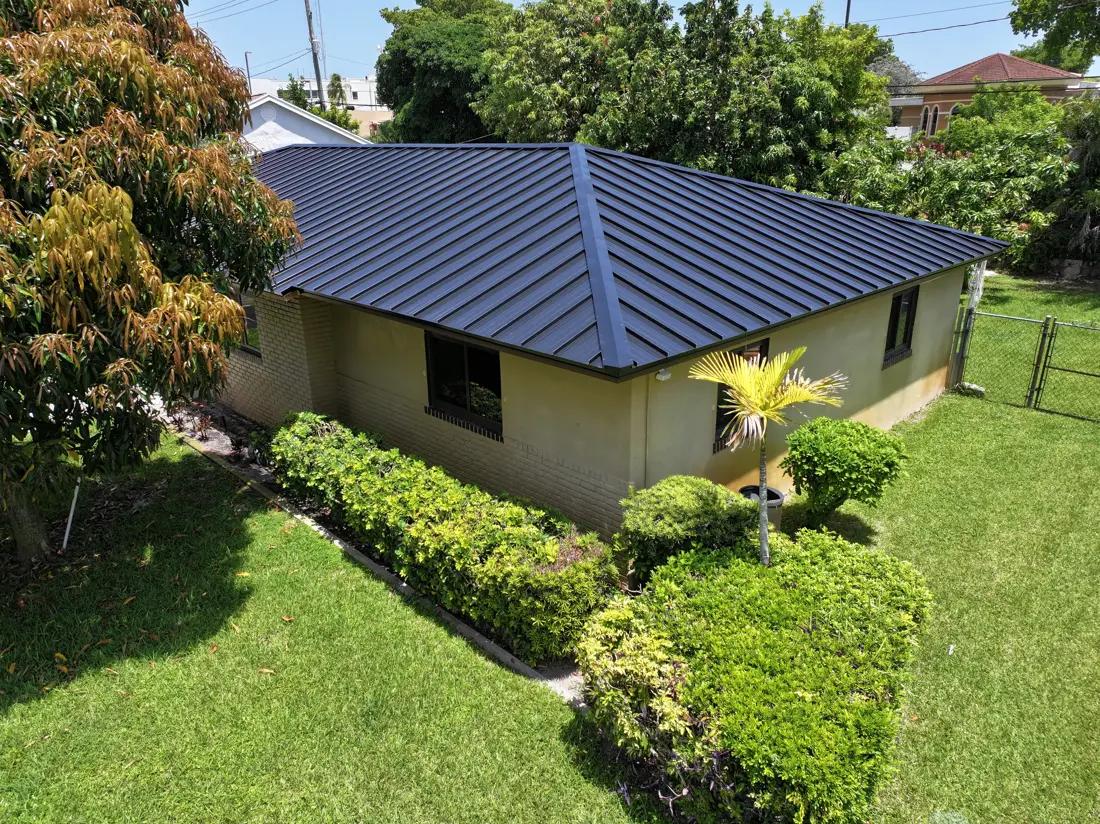 Roofing
It can, in some cases. My Safe Florida Home is a state wind mitigation program run by the Florida Department of Financial Services, and it pays for specific upgrades that make a house harder for a hurricane to damage. A new roof covering can be part of the project cost when the recommended upgrades require taking the old one off. The program doesn’t pay for a roof just because it’s old.
Here’s how the roof side works, using the program’s current homeowner guide, its online FAQ and section 215.5586 of the Florida Statutes.
The roof upgrades the program funds
The statute lists the roof improvements a grant can be used for, when the program’s initial inspection recommends them:
- Reinforcing roof-to-wall connections.
- Improving the strength of the roof deck attachment.
- Installing secondary water resistance for the roof and replacing the roof covering.
The guide describes secondary water resistance as a self-adhered membrane applied directly to the roof deck, taped deck seams, or foam adhesive sealing the seams from the attic side. It also lists methods that don’t qualify, including hot mop, tar, a single layer of felt, and peel-and-stick applied over another underlayment.
When the new roof covering counts
The guide says that if the contractor has to remove the roof covering to do a recommended improvement, the cost of replacing the covering can be included in the total project cost. You can pick tile, metal or shingle. But all portions of the contiguous roof have to be replaced with secondary water resistance to be eligible. A contiguous roof might be all of a flat roof, or all of a pitched roof.
Patching and partial repairs aren’t eligible.
The program’s own one-page sheet on new roofs also points out that most full roof replacements cost more than the maximum grant. So for most families, the grant offsets part of a reroof and the rest is paid in cash or financed.
It isn’t a condition inspection
The program’s inspection looks for hurricane-resistant features, not wear. The guide notes that an aging or worn house may get no roof recommendations at all if those features are already present. No recommendation means no grant for that item, even if the roof itself is tired.
Who can get a grant
The basics, per the statute and the program’s site:
- The home must be site-built, owner-occupied, homesteaded and a single-family home on its own parcel (townhouses are handled separately).
- It must have had the program’s own initial inspection.
- The insured value must be at or below the program’s cap, and the home must have been built before January 1, 2008.
- Under the current statute, grant applicants must be low- or moderate-income, and applications open in phases by income and age.
Townhouse rules have changed from one program year to the next, so check the current guide at mysafeflhome.com.
Program rules to know
- Don’t start work or pull the permit before your grant is approved. The guide says a project isn’t eligible if the construction permit was issued before approval.
- Funding depends on what the Legislature appropriates each year, and it can run out. Check mysafeflhome.com for the current status before you plan around it.
- After approval, you have a year to finish and request the final inspection, with one six-month extension available.
How this fits a roof replacement
If you’re in the program and the inspector recommended roof upgrades, have your initial inspection report handy for the estimate. We’ll price the reroof so the scope lines up with what was recommended. See how we build a hurricane roof, read about roof replacement, or call (786) 654-8273.


