
 Impact Windows
 Impact Doors
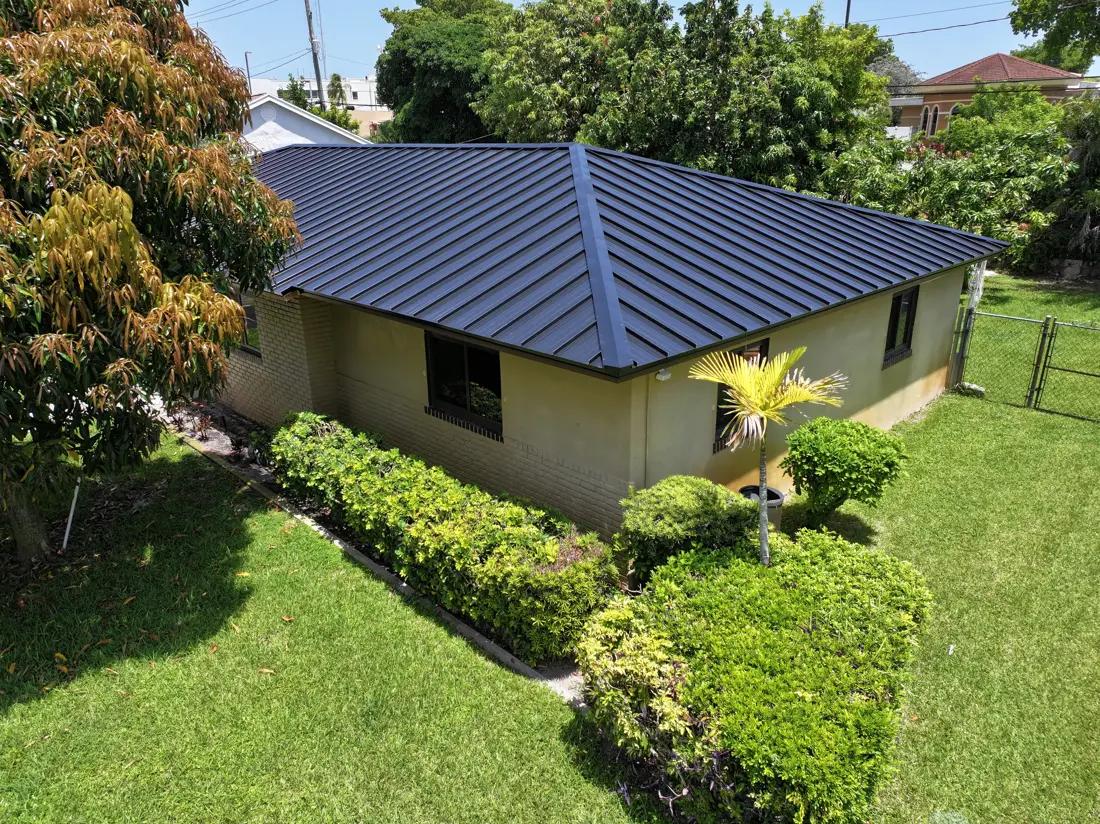 Roofing
A “flat” roof on a house is really a low-slope roof, and below a 2 in 12 pitch shingles and tile are off the table. What goes there is a continuous membrane, or in some cases a standing seam metal system rated for low slopes. The common membrane choices are modified bitumen, single-ply sheets such as TPO, and liquid-applied coatings. The flat roof system on our contracts is a multi-layer, torch-applied modified bitumen with a 20-year manufacturer warranty. Whatever the membrane, drainage and the edges matter as much as the material.
Why shingles and tile can’t go there
Shingles and tile are overlapping pieces. They shed water by gravity and need pitch to do it. The residential code sets 2 in 12 as the lowest pitch for asphalt shingles, and in Miami-Dade and Broward the code’s own definition of a “discontinuous” roof (shingle, tile and similar) starts at that same 2 in 12 pitch. Below it you need a roof that forms one sealed surface, which the code calls a continuous roofing system.
The membranes, in plain terms
- Modified bitumen: asphalt modified with polymers, made in rolls and built up in layers. Ours is torched down in multiple layers. Other systems set the plies in hot asphalt.
- Thermoplastic single-ply: a single sheet, held to its own standards in the code. TPO falls in this group, and its standard is ASTM D6878.
- Thermoset single-ply: EPDM rubber is the familiar one.
- Liquid-applied roofing: coatings such as acrylic, silicone or polyurethane, applied wet to form the membrane.
- Sprayed polyurethane foam: foam sprayed onto the deck and protected with a coating.
The Florida Building Code, Residential holds every one of these to the same minimum design slope of 1/4 inch per foot for drainage (coal-tar built-up roofs can go to 1/8 inch). So “flat” still has to fall toward a drain, gutter or scupper.
Drainage is where flat roofs win or lose
Water that sits on a roof finds every weak seam. The code’s language reflects that:
- On a reroof, the 1/4-inch slope rule can be waived only if the roof has positive drainage, which the code defines as draining within 48 hours after rain.
- Overflow scuppers, where they’re needed, go 2 to 4 inches above the finished roof so a clogged drain doesn’t turn the roof into a pool.
- In Miami-Dade and Broward, repairs can’t create new ponding, and before work starts the contractor has to tell the owner if ponding is possible and recommend a structural review.
Coatings: when they fit and when they don’t
A coating is attractive because it’s applied over what’s there. The code is careful about that.
Outside the HVHZ, a new roof can’t go over an existing one that’s water soaked, deteriorated, blistered without repair, or already two layers deep. A coating over existing spray foam is allowed without a tear-off.
Inside the HVHZ, the Florida Building Code, Building treats covering an existing roof as a recover, and attaches conditions:
- Only one recover is allowed over an original roof, and only if the existing roof meets the code.
- A moisture survey has to show no more than 5 percent moisture by weight in the existing membrane.
- If the new system bonds to the old membrane, the old membrane has to pass an uplift test.
- Foam-and-coating systems need a product approval, inspections after application, and a certification from the coating manufacturer’s representative within 30 days of completion.
If the deck under the old membrane is soft or wet, no coating changes that. The roof comes off.
Two things flat roofs on houses run into
Exposed ceilings. Some patio and Florida room roofs have wood decking you can see from below. Roofing nails through that deck can show. Miami-Dade’s owner’s notification lists exposed ceilings as an item to discuss, and the HVHZ code allows an alternate attachment, designed by a Florida-registered architect or engineer, when the underside’s appearance matters. Our contracts have a field for it so it’s flagged before the crew arrives.
Tie-ins. A flat section usually meets a sloped roof or a wall somewhere, and that joint takes flashing that suits both systems. It deserves as much attention as the membrane itself.
One more code point: when an older roof is replaced, Florida requires a secondary water barrier on the deck, and a continuous roof system on a slope under 2 in 12 already counts as meeting it.
If your flat roof is holding water or leaking at the walls, start with a roof repair inspection. If it’s worn out, we can price it on its own or with the rest of a roof replacement. Call (786) 654-8273.


